| By Web Team | |
| October 4, 2026 | |
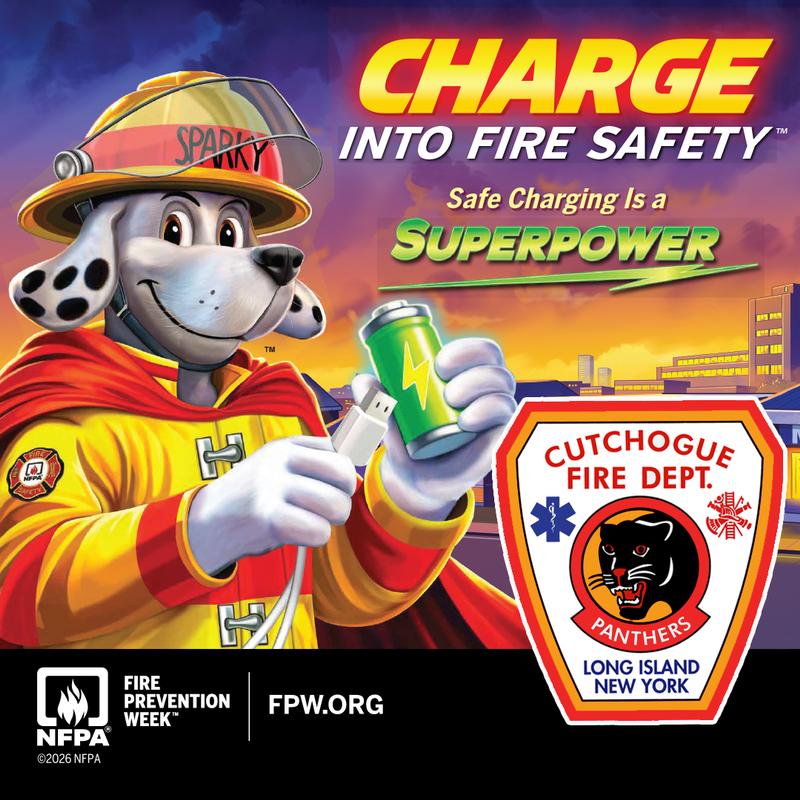
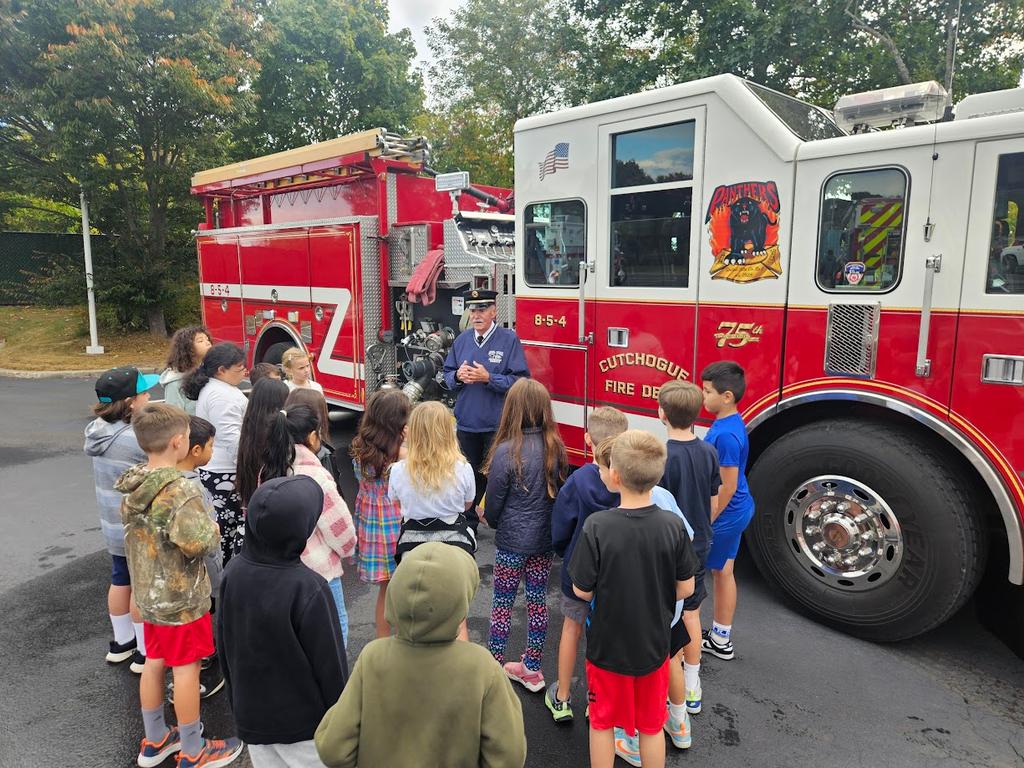
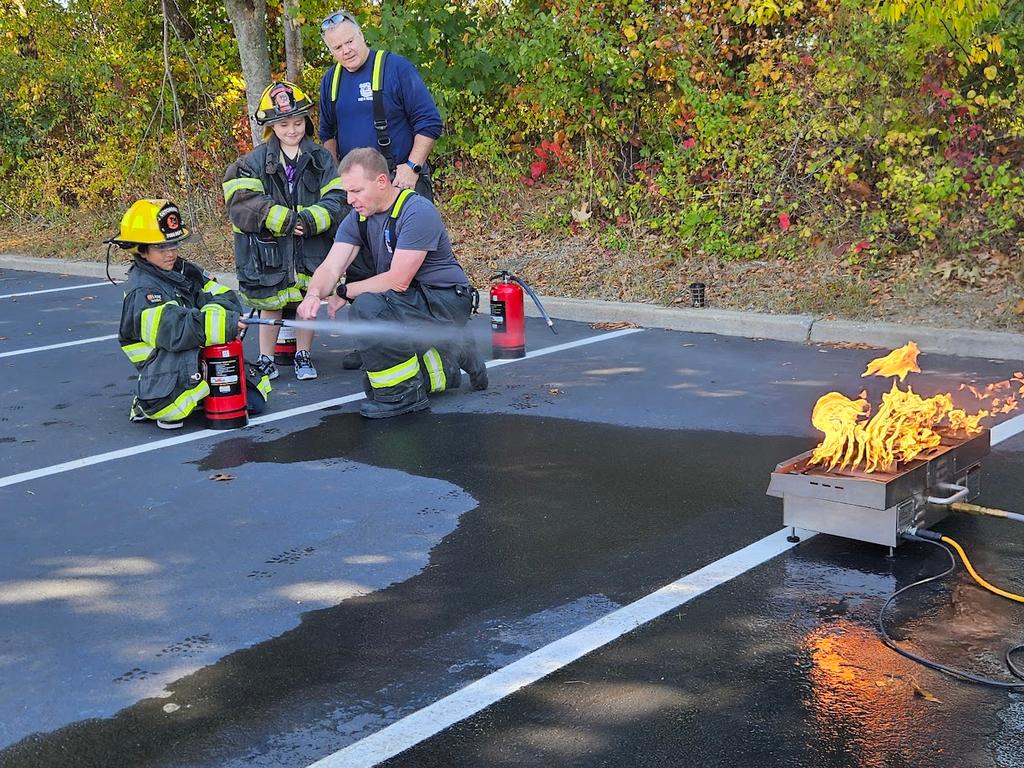
| The Cutchogue Fire Department Urges Residents to Power Up Their Devices with Fire Safety in Mind. The Cutchogue Fire Department is teaming up with the National Fire Protection Association® (NFPA®) to support Fire Prevention Week. This year’s FPW theme, “Charge into Fire Safety: Safe Charging Is a Superpower,” focuses on the simple steps people can take to recharge safely. Safe charging means making smart choices every time you plug in. Many devices used in our daily lives - phones, tablets, laptops, tools, toys, e-bikes, and scooters—run on rechargeable lithium-ion batteries, which store a lot of energy in a small space. If they are damaged or charged the wrong way, they can overheat, start a fire, or even explode. • Use the cord and charger that came with your device or one approved by the manufacturer. Using the wrong charger can damage the battery and increase the risk of fire. • Unplug your device when it is fully charged. Do not leave it plugged in longer than needed. Leaving a device plugged in too long can increase heat and stress on the battery. • Charge larger items like e-bikes, scooters, and power tools outside and away from exits. These batteries are larger and store more energy. If they fail, fires can grow quickly and spread. • When on a plane, keep your device where you can see it while charging. Do not charge devices in overhead compartments. Do not charge e-cigarettes or vapes on a plane. If a battery overheats or fails, it is important for the flight crew to respond quickly. Over the course of this next week, CFD firefighters will be visiting our local schools to teach students the do’s and don’ts of Fire safety. |
|
| Units: | CFD - Prevention through Education |
|
|
|
|
|
|
|
|